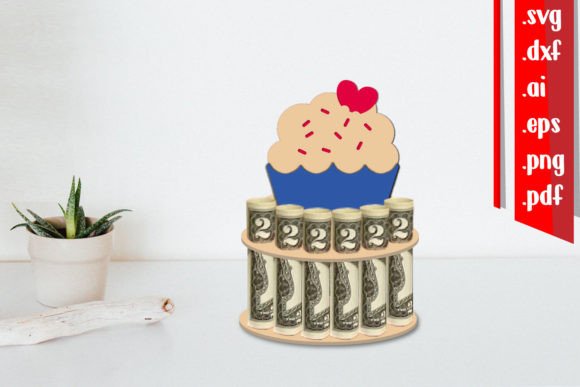
Cup Cake Money Cake Holder Paper Cut: A Designer Review
When I first opened the Cup Cake Money Cake Holder Paper Cut files, I immediately pictured a warm, celebration-ready project. The design has a cheerful, handcrafted personality that feels less like a generic template and more like a starting point for a meaningful handmade product. The cupcake shape, combined with the structured 12-hole layout, creates a mood that is playful, giftable, and surprisingly versatile. It is the kind of design asset that makes you want to test it on fabric right away, just to see how it translates into thread and texture.
The Visual Personality Behind the Cupcake Theme
There is a softness to the Cup Cake Money Cake Holder Paper Cut that reads well at a glance. The cupcake silhouette is recognizable without being overly detailed, which matters a lot when you are thinking about how a design will stitch out on a real embroidery project. A busy graphic can turn into a dense, stiff patch of thread on fabric, but this one strikes a nice balance. The 12-hole papercut layout gives it structure, almost like a decorative frame, and the overall shape would translate naturally into a fill stitch or even a carefully planned applique design if you decide to digitize it that way.
What I appreciate most is that the design does not try to do too much. It knows it is a cupcake. It knows it is a money holder. That clarity makes it easy to imagine on a finished product without second-guessing whether the customer will understand what they are looking at. In a world where many design assets are overcomplicated, this one keeps its promise.
Where This Design Belongs in Real Embroidery Work
As someone who has tested hundreds of graphics before committing them to thread, I think about the end product first. The Cup Cake Money Cake Holder Paper Cut naturally belongs on projects that celebrate something. Birthdays, graduations, baby showers, small business openings, and holiday gifts all come to mind. The cupcake theme is universal, and the money holder concept adds a layer of interaction that appeals to customers looking for personalized gift options.
Let me walk through a real scenario. A few weeks ago, I was preparing a batch of custom embroidered tote bags for a local bakery's anniversary event. They wanted something giftable, something that felt like a treat. I kept coming back to cupcake-themed designs, and this one would have fit perfectly. A tote bag design featuring the cupcake papercut, stitched in a soft buttercream thread on natural canvas, would have looked like a bakery window in fabric form. The 12-hole layout could even be adapted into a decorative border or a playful pocket detail.
Beyond totes, I can see this working on:
- Custom apparel like aprons and kitchen towels for baking enthusiasts
- Sweatshirt embroidery for birthday gifts, especially with metallic thread accents
- Baby embroidery on bibs or onesies for first birthday celebrations
- Embroidered patch applications on denim jackets or canvas pouches
- Pillow covers as part of a nursery decor collection
- Holiday embroidery for Mother's Day or Valentine's Day gifting
Each of these use cases benefits from the design's friendly, approachable shape. When you are building a small shop product line, consistency matters. A design that can move from a tea towel to a sweatshirt without losing its charm is worth keeping in your library.
A Closer Look at the Money Cake Holder Concept
The 12-hole papercut structure is what sets the Cup Cake Money Cake Holder Paper Cut apart from a standard cupcake graphic. In papercraft, those holes are meant to hold rolled bills, creating a money cake. In machine embroidery design, you can interpret that structure in a few different ways. You might digitize the holes as open areas where the fabric shows through, creating a cutwork effect. Or you could fill them with a contrasting satin stitch to make them pop. Either way, the visual rhythm of those twelve circular openings adds texture and interest that a solid silhouette would lack.
I would test this first on a medium-weight cotton or linen blend. The holes are relatively small, so you need to know how your stitch density settings will behave around circular cutouts. Too dense, and the fabric puckers. Too light, and the holes lose definition. This is the kind of detail that separates a professional finished product from something that looks homemade in the wrong way.
Fabric Choices and the Importance of Testing
Every experienced embroidery designer knows that a design lives or dies by its fabric pairing. The Cup Cake Money Cake Holder Paper Cut will look crisp on stable, medium-weight fabrics. Think cotton twill, linen, canvas, and quality quilting cotton. These materials give the stitches a solid foundation, especially around those 12 hole cutouts where precision matters.
On the other hand, I would be cautious with:
- Thin or stretchy fabric like lightweight jersey, which can shift under dense stitching
- Textured fabrics like terry cloth or fleece, where small hole details can get lost
- Dark fabrics unless you are very intentional about thread colors and contrast
- Curved surfaces like caps or hats, where the 12-hole layout might distort
- Layered garments with seams that could interfere with the circular elements
I always recommend testing on scrap fabric first. Run a stitch-out, wash it, see how the holes hold up. If you are planning to sell handmade product items with this design, your customers will notice if the details fray after a few washes. A good stabilizer choice is non-negotiable here. I would use a medium-weight cutaway stabilizer for apparel and a tear-away for flat items like pillow covers or wall hangings.
How the File Formats Support Your Workflow
The product arrives as an instant digital download in a zip file containing six formats: SVG, DXF, AI, EPS, PNG, and PDF. For an embroidery designer, the vector formats are the real workhorses. You can bring the SVG or AI file directly into your digitizing software and use it as a clean base for creating a digital embroidery file. The EPS format is equally useful if you work across different design programs. Having a DXF is a nice bonus for anyone who uses cutting machines alongside their embroidery setup.
The PNG file gives you a quick way to create printable mockup previews for your Etsy listings or client presentations. I often use a high-resolution PNG to show customers how a design will look on different product colors before I stitch a single thread. The PDF is handy for printing a paper reference, especially if you want to mark up sizing notes or thread color swatches directly on the design.
One thing to keep in mind: these are design assets in the Crafts and Graphics category. They are not pre-digitized embroidery files. You will need to do the digitizing yourself or work with a digitizer. The quality of your final embroidery file depends entirely on how well you translate the papercut design into stitch commands. Pay attention to running stitch paths for the outlines, fill stitch directions for the cupcake body, and satin stitch settings for any decorative borders you want to add.
What This Design Does for Your Product Value
A design like the Cup Cake Money Cake Holder Paper Cut does more than decorate fabric. It tells a story. When a customer sees a cupcake-themed embroidery on a kitchen towel or an apron, they immediately associate it with warmth, celebration, and care. That emotional connection is what moves a product from a simple craft business item to something people genuinely want to give as a gift.
For Etsy seller shops and small shop product lines, the design's versatility is a quiet advantage. You can offer it on a whole range of custom apparel and home goods without the design feeling repetitive. A cupcake on a tote bag in pastel threads feels different from the same cupcake on a navy sweatshirt in metallic gold. The 12-hole layout gives each version a slightly different visual rhythm depending on how you handle the cutout areas.
From a brand perspective, consistency matters. If your shop is known for celebration-themed embroidery, adding a cohesive cupcake money holder design to your catalog strengthens your visual identity. Customers start to recognize your aesthetic. They trust that your products will look professional, stitch cleanly, and hold up over time. That trust translates directly into repeat sales and word-of-mouth referrals.
Practical Designer Notes Before You Stitch
I have learned through plenty of trial and error that a few pre-stitch habits save hours of frustration. Here is what I would do before committing the Cup Cake Money Cake Holder Paper Cut to a client project or a batch of inventory:
- Test on scrap fabric first. Do not skip this. Even if the vector file looks perfect on screen, thread behaves differently than pixels.
- Check thread color contrast. The cupcake shape needs to read clearly against the fabric. Test light thread on dark fabric and dark thread on light fabric to see which one gives you the best clarity.
- Review stitch density around the 12 holes. These are the most delicate areas. Too much density creates stiffness; too little loses definition. Find the balance.
- Confirm your hoop size. The design needs to fit comfortably within your embroidery field without crowding the edges. Scale it down only if the details remain legible.
- Inspect small details in a black and white mockup. Removing color helps you see whether the shape and proportions hold up without distraction.
- Use proper stabilizer for your fabric type. A medium cutaway for apparel, a tear-away for flat goods, and always test adhesion on stretchy materials.
- Check licensing before selling. The product description does not specify commercial use terms in detail, so verify what is allowed for finished items and digital products before you list anything in your shop.
These steps are not unique to this design, but they are especially important when you are working with a papercut-style layout that includes multiple circular openings. The difference between a charming finished product and a disappointing one often comes down to whether the designer took the time to test properly.
Who Should Consider Adding This Design to Their Toolkit
If you are an embroidery designer, a craft business owner, or a creative entrepreneur who sells at craft fairs or through Etsy, the Cup Cake Money Cake Holder Paper Cut offers a lot of creative mileage. It fits naturally into celebration-themed product lines, works across multiple fabric types, and gives you a recognizable shape that customers respond to positively.
It is also a smart pick for digital product sellers who create embroidery-ready design bundles or printable mockup collections. The inclusion of multiple vector formats and a PNG means you can use this across different platforms and workflows without extra conversion steps.
For hobbyists and makers who simply enjoy creating personalized gift items for family and friends, this design is approachable and forgiving. The cupcake theme is easy to love, and the money holder concept adds a layer of thoughtfulness that turns a simple stitched item into a keepsake.
Ultimately, the Cup Cake Money Cake Holder Paper Cut earns its place in a well-curated design library. It is not flashy or overcomplicated, but it is practical, warm, and ready to adapt to whatever embroidery project you have in mind. Take the time to test it, choose your fabrics wisely, and let the design's natural charm do the rest.