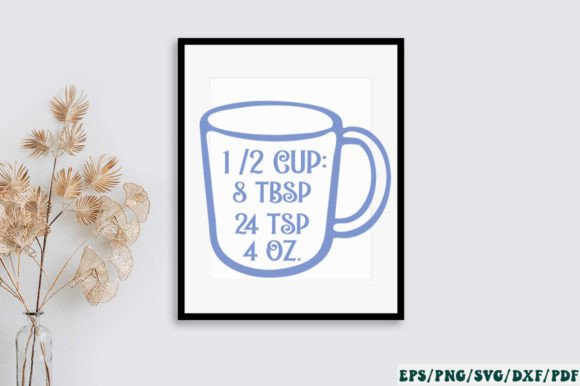
1 2 Cup 8 Tbsp 24 Tsp 4 Oz SVG: A Designer's Honest Review
When I first opened the 1 2 Cup 8 Tbsp 24 Tsp 4 Oz SVG file, I immediately pictured it on a flour-dusted apron hanging in a sunlit kitchen. There is something quietly confident about a kitchen conversion chart rendered as a design asset. It does not try to be cute or trendy. It leans into utility, and that is exactly what makes it memorable for crafters and small business owners who build products around everyday life. The layout reads like a quick-reference cheat sheet, the kind a home cook would glance at mid-recipe, and that functional personality gives it a warmth that purely decorative designs sometimes lack.
The collection comes bundled as a zipped folder containing SVG, DXF, PNG, EPS, and PDF formats. For anyone running a Crafts or Graphics workflow across multiple machines, that variety matters. The SVG plays nicely with Cricut Design Space and Silhouette Designer Edition, and the DXF opens doors for those still using older cutting software. Having the PNG on hand also means you can drop it straight into a printable mockup without converting anything, which is a small but real time-saver when you are juggling product listings and client previews.
First Impression: Utility Meets Quiet Charm
The visual personality of 1 2 Cup 8 Tbsp 24 Tsp 4 Oz SVG sits somewhere between a vintage recipe card and a modern minimalist kitchen print. The proportions feel balanced, not crowded, even though it packs multiple measurement conversions into one layout. The hierarchy is clear: the cup measurement anchors the design, while the tablespoon, teaspoon, and ounce equivalents radiate around it in a way that feels organized rather than cluttered. For an embroidery designer, that clarity is gold. A design that reads well at a glance on a screen will usually translate cleanly to thread, provided you handle the digitizing with care.
I could see this working beautifully as an embroidered patch sewn onto a canvas apron, or as a direct-to-garment embroidery on a kitchen towel bundled into a holiday gift set. The mood is nostalgic without being overly sentimental, which means it appeals to a broad range of customers, from newlyweds setting up their first kitchen to seasoned home bakers who appreciate a clever reference tool stitched right onto their favorite linen.
Where This Design Naturally Belongs
Some designs fight their category. This one does not. The 1 2 Cup 8 Tbsp 24 Tsp 4 Oz SVG belongs on kitchen textiles first and foremost. I would confidently place it on tea towels, aprons, pot holders, and bread bag panels. It also translates surprisingly well to tote bag design for anyone curating a farmer's market aesthetic or a small-batch pantry brand. Picture a natural cotton tote with this conversion chart embroidered in a warm charcoal thread, carried by someone who just bought fresh produce and artisan bread. That is the lifestyle this design sells, and it sells it honestly.
Beyond kitchenware, there is a niche for this on custom apparel aimed at cooking enthusiasts. A lightweight sweatshirt with the chart embroidered small on the chest pocket area feels like a thoughtful gift for a baker friend. A baby embroidery application might seem unexpected, but I have seen conversion charts stitched onto baby bibs as a playful nod to measuring and feeding, and parents respond to that kind of clever detail. The key is matching the design's scale to the product's surface area, something I will explore more in a moment.
Real-Life Test: The Custom Tea Towel Project
Let me walk through a real scenario. A client approached me about creating a small batch of embroidered tea towels for her boutique kitchen shop. She wanted something useful, not just decorative, and she wanted the stitching to feel substantial enough to survive regular washing. I pulled up the 1 2 Cup 8 Tbsp 24 Tsp 4 Oz SVG and started testing.
The first thing I noticed was the lettering. The teaspoon and tablespoon abbreviations are compact, and on a small hoop size like a 4x4, those characters could lose definition if the digitizing is not adjusted properly. I ran a test stitch on a flour sack cotton towel with a medium-weight cutaway stabilizer. The result was promising but not perfect on the first pass. The smaller text needed a slightly reduced stitch density to prevent puckering on the lightweight fabric, and I opted for a satin stitch on the main numbers with a fine running stitch for the secondary labels. Once I dialed that in, the design looked crisp and professional.
I also tested it on a darker linen blend, and that is where thread color contrast became critical. A dark navy towel with off-white thread made the chart pop beautifully, but a mid-tone gray on the same fabric washed out completely. My advice: always test on both light and dark fabric backgrounds before committing to a production run. What looks sharp on a white screen can disappear on a mushroom-colored linen.
Stitching Clarity and Detail Considerations
Text-heavy designs demand respect. The 1 2 Cup 8 Tbsp 24 Tsp 4 Oz SVG is not a simple outline shape or a single-color silhouette. It contains multiple lines of information, and each character needs to remain legible after the needle hits the fabric. If you are digitizing this for machine embroidery design use, pay close attention to the minimum letter height. I would not recommend stitching the smallest text elements below a quarter-inch in height, especially on textured fabric like terry cloth or waffle weave. The thread will sink into the texture and blur the edges, turning a charming reference chart into an unreadable smudge.
For stretchy fabric like a t-shirt or a lightweight sweatshirt, a firm stabilizer is non-negotiable. I learned this the hard way years ago when a beautiful text design distorted into a wavy mess on a bamboo-cotton blend. Now I use a fusible mesh stabilizer for knits and always run a test swatch before embroidering on the final garment. The same rule applies here. A conversion chart that wobbles looks unprofessional, and customers will notice.
Product Value and Customer Perception
One of the quiet strengths of this design is how it elevates a simple product into something that feels intentional. A plain tea towel is a commodity. A tea towel with a neatly embroidered 1 2 Cup 8 Tbsp 24 Tsp 4 Oz SVG becomes a personalized gift that feels curated. For Etsy sellers and craft business owners, that difference translates directly into higher perceived value and stronger buyer engagement. Customers who might scroll past a generic floral pattern will pause on a conversion chart because it signals usefulness paired with craftsmanship.
This also plays well into brand consistency. If you run a small shop built around kitchen goods, pantry staples, or homemade food culture, this design reinforces your brand identity without needing a logo on every item. The chart itself becomes a recognizable signature. I have seen shops build entire product lines around a single well-chosen kitchen motif, and a measurement conversion chart has the kind of timeless appeal that does not fade with seasonal trends.
Watchpoints: Where Caution Pays Off
I want to be straightforward about where this design needs careful handling. Curved surfaces like caps and hats are tricky because the linear layout of a conversion chart can warp visually when wrapped around a dome. If you are determined to use it on a cap, consider isolating a smaller portion of the design rather than stitching the full chart. The same caution applies to layered garments with seams running through the embroidery area. A seam under the text will create uneven tension and distort the lettering.
Dense stitch areas are another consideration. The numbers and abbreviations might look balanced as flat vector art, but once converted to stitches, the concentrated thread coverage in the bolder sections can create stiffness on lightweight fabrics. I recommend reviewing the stitch density carefully during digitizing and possibly lightening the fill on the larger characters to keep the fabric drape soft. This is especially important for items like pillow covers or blankets where the hand feel matters as much as the visual appeal.
For products that need frequent washing, such as kitchen towels and aprons, thread choice becomes part of the durability equation. Polyester thread holds up better than rayon under repeated laundering, and a high-quality stabilizer that does not break down after a few washes will keep the embroidery looking sharp for years. I always recommend mentioning care instructions to customers when selling finished products, it builds trust and reduces returns.
Practical Embroidery Designer Notes
Before you stitch the 1 2 Cup 8 Tbsp 24 Tsp 4 Oz SVG on any final product, please test it on scrap fabric first. I know that sounds like obvious advice, but I have skipped this step in a rush and regretted it. Test the design in its actual intended size, on the same fabric type, with the same stabilizer and thread combination you plan to use. Check how the smallest text reads from a normal viewing distance. If it strains the eye, scale up slightly or simplify the detail level.
I also recommend viewing the design in black and white on a mockup before committing to thread colors. Removing color from the equation reveals whether the layout holds its own through contrast alone. This is a useful check for any text-heavy embroidery file because thread blending can sometimes soften edges that looked crisp in the original vector art. If the design still reads clearly in grayscale, you have a strong foundation for stitching.
Confirm your hoop size accommodates the full design at the scale you want. The zipped folder includes multiple formats, so you have flexibility, but the physical embroidery area on your machine is the ultimate constraint. Measure twice, stitch once.
Licensing and Commercial Use Clarity
The product description does not specify commercial license terms, so I strongly advise verifying the usage rights before listing finished items for sale. The download includes SVG, DXF, PNG, EPS, and PDF formats, which is generous for a digital embroidery file bundle, but format availability does not automatically equal commercial clearance. If you plan to sell embroidered tea towels, aprons, or tote bags featuring this design, reach out to the seller or check the included documentation for explicit permission. This protects your shop and keeps your business practices above board.
For digital product sellers who want to use the PNG or PDF in printable mockups or design assets for client work, the same rule applies. The file formats are convenient, and I appreciate that the bundle is structured for cross-platform use, but your commercial workflow depends on clear licensing. Do not assume. Confirm.
Final Thoughts From the Worktable
The 1 2 Cup 8 Tbsp 24 Tsp 4 Oz SVG earns its place in a crafter's library not because it is flashy, but because it is useful. It stitches into a finished product that people will actually use in their daily lives, and that kind of practical beauty tends to generate repeat customers and word-of-mouth referrals. For handmade product creators, apparel decorators, and creative entrepreneurs, a design that marries function with visual charm is always worth the test stitch.
Treat the small details with respect, choose your fabric and stabilizer thoughtfully, and this kitchen conversion chart will reward you with a finished product that feels both professional and genuinely personal. That is the sweet spot where good craft businesses thrive.