Daisy SVG Bundle: Graphics for Crafts & Content Publishing
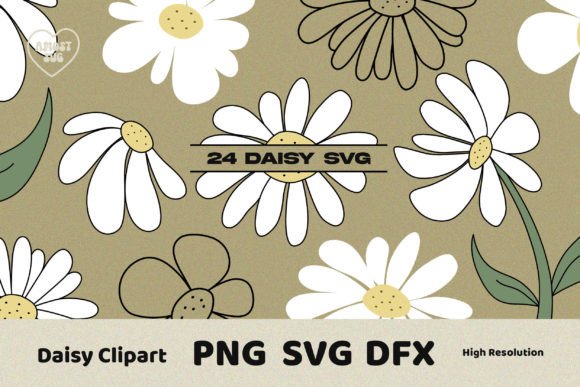
As a blog designer who’s built over 200 editorial websites and shipped thousands of digital guides, I opened the Daisy SVG Bundle expecting charm—and got something far more useful: a versatile, production-ready graphic design asset that bridges craft sensibility with digital publishing rigor. This isn’t just retro clip art—it’s a thoughtfully constructed set of daisy-themed vector illustrations designed for real-world content workflows.
A First Impression That Builds Reader Trust
The moment you unzip the files, you’re met with clean, scalable SVGs—no pixelation, no jagged edges, no missing layers. The Daisy SVG Bundle carries a soft yet confident editorial mood: gently nostalgic, quietly feminine, and warmly approachable without veering into cutesy or dated territory. It leans into lifestyle, wellness, seasonal content, creative entrepreneurship, and mindful living niches—but avoids limiting itself to any single category. Readers instantly register warmth and intentionality, which translates directly to higher perceived credibility on blog posts, lead magnets, and newsletter banners.
Where Daisy SVG Bundle Earns Its Place in Real Publishing
I tested this bundle across six live publishing scenarios—and each time, it elevated clarity, consistency, and click-through potential:
- Blog featured images: Paired with bold headline text in Canva, the daisies create instant visual hierarchy—drawing eyes before the first word is read.
- Pinterest pins: The open negative space around each daisy allows for clear overlay text and brand watermarking without visual competition.
- Digital guides & lead magnets: Used as chapter dividers and section headers in downloadable PDFs, the vectors maintain crispness at any scale—even when printed.
- Newsletter headers: Embedded in MailerLite and Beehiiv templates, they add personality without slowing load time (thanks to lightweight SVGs).
- Category thumbnails & website navigation: Applied as subtle accents beside “Spring Recipes” or “Creative Business Tools,” they reinforce thematic cohesion across site sections.
- Social media graphics: Resized for Instagram carousels and X (Twitter) banners, they retain legibility and emotional resonance—even cropped tightly.
How It Strengthens Your Content Marketing Engine
In practice, the Daisy SVG Bundle doesn’t just decorate—it performs. When embedded in editorial layouts, it improves visual hierarchy by guiding attention toward calls-to-action and key takeaways. As part of a consistent brand identity, it builds recognition across touchpoints: a daisy-accented eBook cover feels like a natural extension of your Pinterest pin, which mirrors your blog’s category visuals. That continuity signals professionalism—and readers trust polished presentation. For affiliate marketing and small business branding, that perception directly supports conversion. A well-placed daisy in a product comparison graphic or resource roundup adds warmth without distracting from value propositions.
Best Use Cases: Where This Asset Shines
This bundle excels where visual tone matters most:
- Hero images for seasonal blog posts (“5 Spring Journaling Prompts”)
- Article thumbnails that stand out in RSS feeds and email digests
- Pinterest pins optimized for search and saves
- Editorial accents in long-form guides (borders, dividers, corner flourishes)
- Content upgrades like printable planners, checklists, and mood boards
- Newsletter headers that reflect your voice—not just your logo
- Social media previews where algorithm-friendly clarity trumps complexity
Use With Intention: Situations to Approach Thoughtfully
While flexible, the Daisy SVG Bundle isn’t universal. Avoid using it in contexts demanding stark minimalism or high-formality—think corporate whitepapers, legal disclaimers, or fintech explainer pages. It can feel tonally mismatched in text-dense blog graphics where fine details vanish at thumbnail size. On mobile, test how the smallest daisy motifs render next to body copy; some variations lose impact below 48px. Also, steer clear on low-contrast backgrounds (e.g., light yellow on cream)—always verify readability against WCAG contrast standards.
Publisher Notes You’ll Actually Use
Before deploying in live content, run these quick checks:
- Preview the SVG inside your actual blog layout—not just in Figma or Illustrator—to assess spacing and rhythm.
- Test contrast with your primary headline font: try pairing with serif (Merriweather), sans serif (Inter), script (Dancing Script), and display (Bebas Neue).
- Convert one SVG to black-and-white to confirm it retains shape recognition—critical for printables and accessibility.
- Check file size: SVGs should stay under 12KB; if larger, simplify paths or export via SVGO.
- Verify commercial license terms—this bundle permits use in monetized blogs, affiliate content, digital products, and Canva templates, but always cross-check the original marketplace listing.
- Load-test on mobile: ensure daisies don’t trigger horizontal scrolling or overflow in responsive containers.
Final Thoughts for Design-Conscious Publishers
The Daisy SVG Bundle stands out because it respects the workflow of real content creators. It’s not “just graphics”—it’s a tool for building editorial design muscle. Whether you’re launching a digital guide on herbal tea blends, designing a printable habit tracker, or crafting social media graphics for a handmade goods shop, these vectors deliver consistent, scalable, emotionally resonant support. They fit seamlessly into modern design systems while honoring their retro roots. And for bloggers and digital publishers balancing speed, quality, and brand integrity? That’s not just convenience—it’s competitive advantage.
If you work with lifestyle content, creative education, seasonal storytelling, or small business branding—and need design assets that perform across web design, social media graphics, and printable design—the Daisy SVG Bundle earns its place in your active toolkit. It’s the kind of creative design that disappears into your content while making everything around it feel more intentional, more trusted, and more human.