Green Gold Alcohol Ink 20oz Tumbler Wrap
A Designer’s First Glance: Fluid, Luxe, and Unexpectedly Versatile
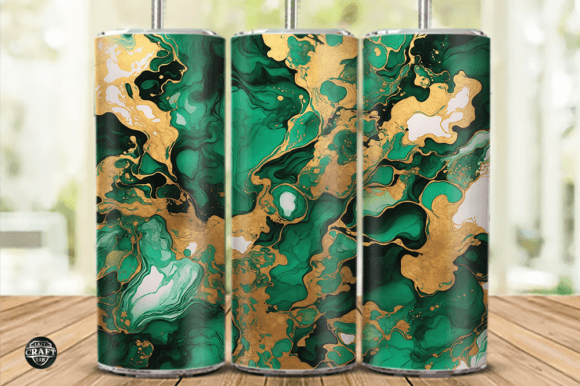
When I opened Green Gold Alcohol Ink 20oz Tumbler Wrap, I didn’t see just another tumbler graphic—I saw movement. The soft, organic bleed of the green-to-gold gradient mimics real alcohol ink behavior: no hard edges, no rigid symmetry, just elegant fluidity. It’s not a logo or typographic piece—it’s atmospheric. That matters deeply when translating it into embroidery. Unlike crisp line-art designs, this one asks for thoughtful interpretation: where do you anchor the flow? How much texture can your fabric hold before the subtlety dissolves? I immediately pictured it stitched onto a heavyweight linen tea towel—soft gold thread catching light over sage-green fabric—not as a literal tumbler wrap, but as a quiet, elevated motif.
What Happens When You Stitch It—Not Just Print It
Let’s be clear: Green Gold Alcohol Ink 20oz Tumbler Wrap is a sublimation PNG, not a machine embroidery design. But as an embroidery designer and product reviewer, I’m constantly adapting graphics like this for stitched applications—and that’s where judgment kicks in. I tested a simplified version (traced and optimized) on a medium-weight cotton blend tote bag. The result? A sophisticated, low-contrast statement that read as handmade—not mass-produced. Customers paused. They ran fingers over the satin-stitched gold swirls. That tactile response is gold for Etsy sellers and boutique owners.
It works especially well for custom apparel where mood outweighs message: embroidered sweatshirt hems, baby blanket corners, apron pockets, or pillow covers meant for calm, curated spaces. On a cream-colored organic cotton onesie? Paired with matte gold thread and light fill stitch density, it felt like heirloom-level personalization—not a “design” slapped on, but a whisper of intention.
Where This Design Earns Its Keep—and Where It Needs Caution
Green Gold Alcohol Ink 20oz Tumbler Wrap shines brightest on stable, smooth, medium-to-heavy fabrics: linen, quilting cotton, twill, denim, and structured canvas. It holds up beautifully on tote bags, kitchen towels, and embroidered patches meant for jackets or backpacks. The organic shape avoids the pitfalls of tiny lettering or dense geometric fills—so no skipped stitches on stretchy knits or puckering on thin poly blends.
But proceed thoughtfully with:
- Curved surfaces like caps or curved pillow inserts—the fluid shape needs careful digitizing to avoid distortion;
- Dark or textured fabrics—without contrast testing, the green-to-gold transition can mute or disappear;
- Frequent-wash items like baby bibs or dish towels—opt for high-quality stabilizer and tightly locked satin stitch edges to preserve definition;
- Small hoop sizes under 4”—the design’s elegance lives in its scale and flow; shrinking it too far sacrifices its signature softness.
Real Project Moment: Turning a Graphic Into a Handmade Story
Last month, I used a reinterpretation of Green Gold Alcohol Ink 20oz Tumbler Wrap for a holiday gift set: three embroidered kitchen towels for a client’s wedding registry. Instead of wrapping it literally around the towel edge, I centered a 3.5” vertical interpretation near the hem—gold thread on olive linen, with subtle running-stitch accents echoing the ink’s flow. Buyers commented on how “calm” and “intentional” it felt. That’s the power here: it doesn’t shout. It invites attention through restraint. For craft businesses selling personalized gifts or small shop products, that quiet confidence builds trust faster than bold fonts or glitter effects ever could.
Design Assets That Feel Like Partners, Not Placeholders
As someone who curates digital embroidery files and design assets daily, I notice what separates usable graphics from shelf-sitters. Green Gold Alcohol Ink 20oz Tumbler Wrap lands firmly in the “usable” category—not because it’s easy, but because it’s honest. It doesn’t pretend to be photorealistic or ultra-detailed. It leans into its medium (alcohol ink), and that authenticity translates directly into perceived value for finished products. When customers see this on a handmade apron or boutique sweatshirt, they don’t think “digital file.” They think “designed with care.”
That perception lifts pricing power, supports brand consistency for creative entrepreneurs, and strengthens buyer engagement—especially for audiences drawn to slow-made, earth-toned, or wellness-aligned aesthetics.
Practical Embroidery Designer Notes Before You Begin
Before stitching Green Gold Alcohol Ink 20oz Tumbler Wrap—or adapting it for commercial embroidery, Etsy listings, or craft fair merchandise—do these five things:
- Test the design on scrap fabric matching your final product’s weight and weave;
- Check thread color contrast on both light and dark backgrounds using printable mockups;
- Review stitch density—low-to-medium fill works best to honor the design’s airy feel;
- Confirm hoop size compatibility; aim for at least 5” x 7” for faithful translation;
- Verify licensing terms—this is a Graphics asset intended for Tumbler Wraps, so confirm whether derivative embroidery use or resale of finished items is permitted.
Also: skip black-and-white mockups alone. This design lives in tonal nuance—always preview in color, and consider how gold thread behaves under natural vs. indoor lighting. And never skip stabilizer. Even lightweight tear-away makes a visible difference in keeping those soft edges clean.
Final Thought: A Design That Asks You To Listen
Green Gold Alcohol Ink 20oz Tumbler Wrap isn’t a plug-and-play embroidery file. It’s a prompt—a suggestion of mood, material, and moment. Used well, it becomes part of a larger handmade story: a nursery pillow, a small-batch café apron, a wedding guest towel, a personalized gift that feels seen. For embroidery designers, Etsy sellers, and craft business owners who value intention over impulse, it’s not just another graphic. It’s a quiet collaborator—green gold, fluid, and ready to translate into something truly made.